Time does not ask for attention, yet it quietly governs every habit, decision, and moment of rest or urgency in modern life, and as 2026 unfolds, the way people interact with time feels more exposed, more discussed, and more emotionally charged than ever before. Screens blur mornings into nights, deadlines arrive faster than expected, and even moments of joy seem to pass before they are fully noticed, which is why understanding time itself has shifted from a philosophical curiosity into something deeply practical and personal.
Most people glance at the clock dozens of times a day, often without thinking, yet that simple act connects them to a shared global rhythm, one you can see instantly through the current time, a reminder that billions of people are anchored to the same ticking framework even while living wildly different lives. At its core, time is more than a number or a schedule, a reality explored in depth through what time actually is, which reveals how deeply human agreement shapes something we often treat as absolute.
Even basic planning reveals how dependent daily life is on clear time logic, since calculating durations, overlaps, and gaps is something humans rely on constantly, which explains why tools like the time calculator exist at all, not because the math is impossible, but because mental clarity matters more than raw arithmetic in real life.
How Time Is Constructed Before It Is Experienced
1. Long before clocks were mechanical or digital, timekeeping relied on shadows, stars, and seasonal cycles, and those early observations still influence modern systems, as explained through the historical foundations outlined in the science of measuring time, where astronomy and observation first shaped order.
2. The decision to divide a day into 24 hours came from ancient numerical preferences rather than natural necessity, a choice that continues to structure modern schedules, workdays, and sleep cycles, which is fully explained in why a day contains 24 hours.
3. Minutes and seconds follow the same logic, since sixty is mathematically flexible and easy to divide, a design choice that quietly supports everything from cooking to space travel, as detailed in why there are 60 seconds in a minute.
4. The familiar AM and PM labels come from Latin phrases tied to the sun’s position in the sky, a linguistic shortcut that froze ancient solar logic into everyday speech, with its origins clearly broken down in why we say AM and PM.
5. While most people follow solar time based on the sun’s position, scientists also track sidereal time based on Earth’s rotation relative to distant stars, a distinction that matters for astronomy and satellites and is explained through the difference between sidereal and solar time.
The Invisible Standards Holding the World Together
6. Coordinated Universal Time acts as the backbone of global synchronization, ensuring that flights, servers, and communication systems remain aligned, a role clarified in UTC as the world’s time standard.
7. Many people casually use GMT and UTC interchangeably, yet subtle technical differences exist, especially in scientific and digital contexts, which are carefully explained in the difference between GMT and UTC.
8. Leap years exist because Earth’s orbit does not fit neatly into whole days, and without occasional adjustments the calendar would slowly drift away from the seasons, a correction process outlined in leap year time alignment.
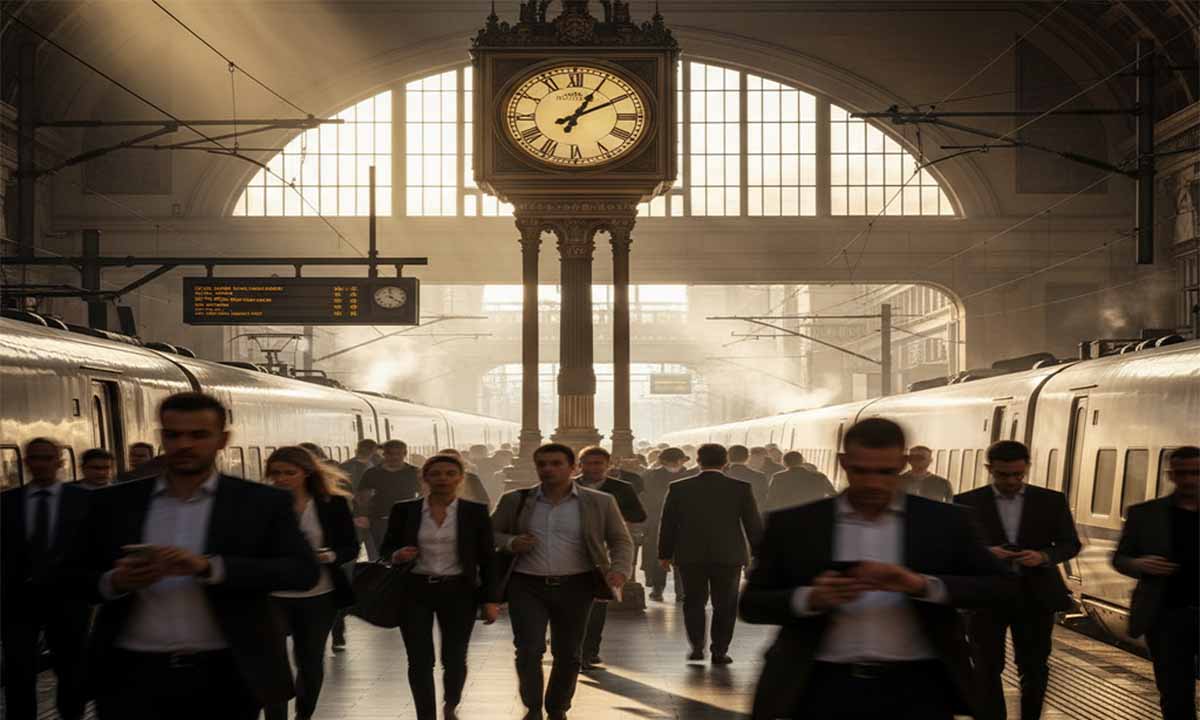
9. Public clocks still shape human behavior, acting as gathering points and reference anchors in busy environments, a phenomenon captured vividly in where the clock ticks and crowds gather.
Why Time Feels Different Inside the Mind
10. Psychological perception plays a massive role in how long moments feel, since boredom stretches minutes while excitement compresses hours, a phenomenon explored in why time feels fast or slow.
11. As people age, years often seem to accelerate because memories compress repeated experiences, making novelty feel shorter, a shift explained in why time feels faster as we age.
12. Digital habits further distort perception, especially late at night, where endless scrolling quietly erodes sleep, a behavior pattern examined in the case study on alarms and doomscrolling.
“Time itself remains steady, but attention bends it in surprising ways.”
Ordinary Moments That Reveal Time’s Power
13. Cooking offers one of the clearest demonstrations of time’s reliability, since precision transforms raw ingredients into consistent results, a truth illustrated perfectly in the perfect burger timer.
14. Alarms quietly shape routines more effectively than motivation alone, creating structure through repetition rather than willpower.
15. Shared schedules reduce friction, since agreed start times prevent misunderstandings and build trust.
- Clocks reduce social tension.
- Schedules protect mental space.
- Routines preserve energy.
16. Lost time often feels heavier than lost objects because moments cannot be replaced once they pass.
Hidden Facts Running the Modern World
| System | Role of Time |
|---|---|
| Aviation | Precise timing prevents midair conflicts. |
| Finance | Timestamps verify transactions. |
| Healthcare | Medication timing affects outcomes. |
17. Atomic clocks maintain accuracy to fractions of a second over millions of years, forming the backbone of modern synchronization.
18. Time zones exist for human convenience rather than physical necessity, balancing daylight with social order.
19. Technology increased speed but never added hours, leaving humans to adapt rather than extend the day.
20. Awareness of time correlates strongly with life satisfaction, since people who manage time well often protect rest, focus, and relationships.
“Time is the shared agreement that lets billions act in rhythm.”
A Summary
Time is measured by science, organized by standards, and experienced emotionally, shaping both global systems and private moments in ways that remain deeply human.
Listening to the Clock Without Rushing It
Time will continue moving at its steady pace regardless of trends or technology, yet understanding how it works and why it feels strange allows people to live with greater intention, patience, and clarity as the clock keeps ticking forward.